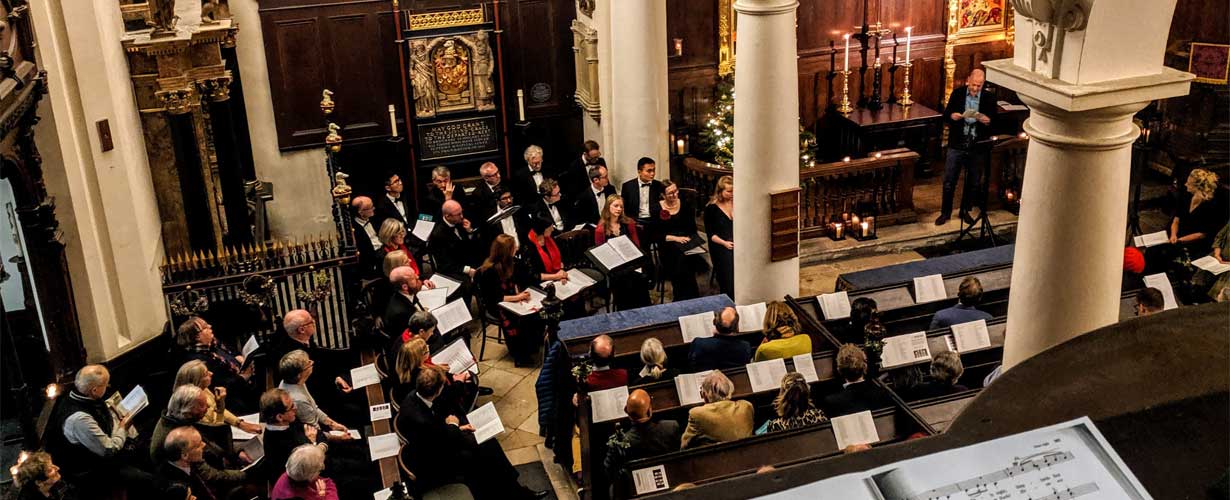
The history of the Chapel
The chapel has evolved with the history of the Charterhouse. The aisle is in the footprint of the chapterhouse of the Carthusian monastery, which would have been used for the daily business of the monastery including debates. It is where the Prior and monks would have discussed supporting the Oath of Supremecy, and made their decision regarding whether to comply or not. The antechamber also retains glimpses of the original monastic building in the bosses and moulded stone ribs and dates to 1512, it would have been the passageway to the monastic Priory Church that stood alongside it.
During the reign of Henry VIII, the Dissolution of the Monasteries saw the closure and confiscation of monastic property in England and Wales as part of the break with Rome and the Catholic Church. Prior John Houghton and some members of the monastic community at the Charterhouse refused to support the Oath recognising Henry as the supreme Head of the Church of England. Houghton was subsequently put to death at Tyburn, fifteen monks and lay brothers were either excecuted or died in Newgate Prison and the monastery was dissolved.
The Charterhouse survived this turbulent period and was used to house Henry VIII’s hunting equipment, tents, and marquees before being adapted for Edward North’s Tudor mansion, which included a private chapel.
In 1614, the governors of Thomas Sutton’s charity commissioned architect Francis Carter to carry out further work on the chapel. He designed the north aisle and the Tuscan arcade and was also responsible for the spacious cloister which joins the chapel to the main building. This cloister is a place of burial and memorial and its windows face Chapel Court the site of the original 1349 church, which was a burial ground chapel for victims of the Black Death interred in the grounds of Charterhouse Square.
The interior of the chapel features a Jacobean carved wood screen, pulpit, and organ gallery some of which is the work of Master Carver John James. Thomas Sutton’s memorial dominates the north aisle of the Chapel featuring work by Nicholas Stone who later became Master Mason to James I (James VI of Scotland) and Charles I.
Further adaptations to the chapel were made to accommodate the requirements of Sutton’s charity, which made provision for the care of 80 ‘Poor Brothers’ in housing need and the education of 40 boys from impoverished backgrounds. Brothers were required to attend Chapel twice a day up until 1907, or risk being fined, and the schoolboys also attended until the school moved to Godalming in Surrey in 1872. The chapel was extended in 1825 when a bay was added to better accommodate the schoolboys who were not foundation scholars, and they sat in the stalls adjacent to the pews in the nave where the Master could keep an eye on them from his seat in the raised stalls opposite.
The Chapel today
Regular services are held in the Chapel, to which visitors are very welcome, as well as baptisms, marriage blessings, and memorial services. For further information on baptisms, wedding blessings, and memorial services please contact the Preacher, and for civil marriages and wedding venues please contact Venue Hire.